If you have been reading the NY Times these past couple of years, you may have stumbled across one of several articles in the field of educational research that is concerned with the importance of play. First there was Wells’ article, “The 3 R’s? A Fourth is Crucial, Too: Recess.” Then came Paul Tough’s article “Can the Right Kinds of Play Teach Self-Control?” And just last week, Susan Engle wrote about “Playing To Learn”, which posits that “our current educational approach and the testing that is driving it is completely at odds with what scientists understand about how children develop during the elementary school years.” The research is clear in explaining that laundry lists of skills and drills are not the whole picture, nor do they “produce” results in overall achievement. Rather, if schools can manage to develop programs with a few clearly defined overarching goals, our kids would greatly benefit from this longer view. Doing fewer things in order to do them well is where it is at; something that Quaker educators have known all along. The research is unequivocating, we knew it when our kids were in preschool, the same holds true for their elementary years; our kids are still constructing knowledge in social environments, so they still learn through play.
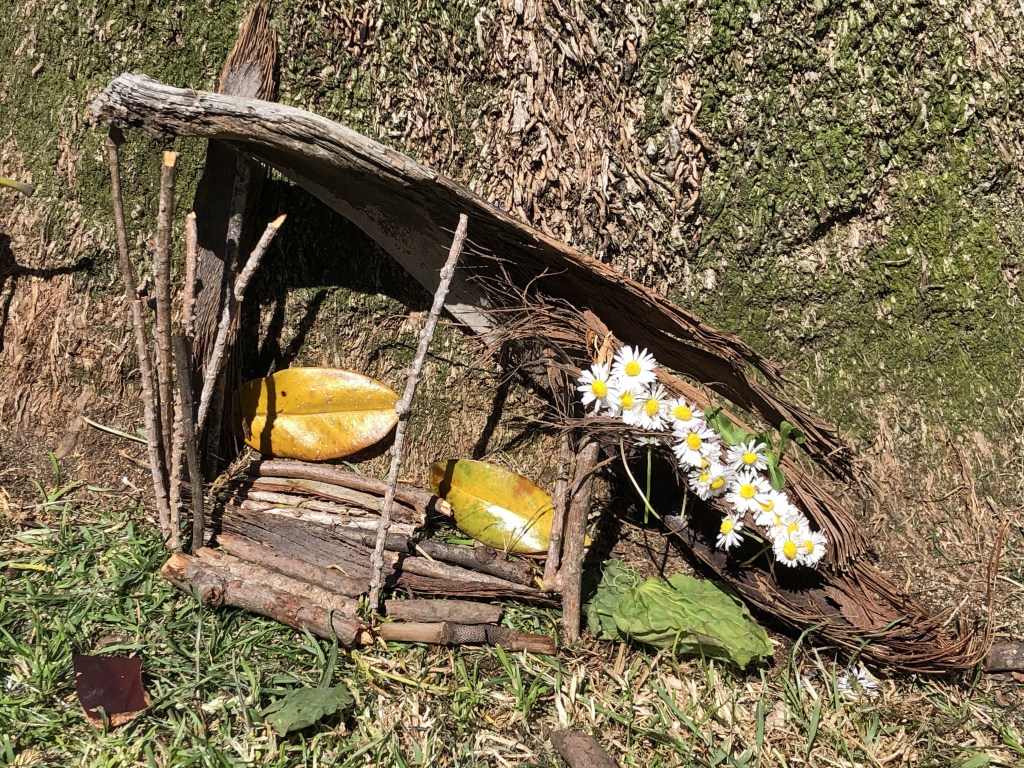
So what about play, and what about recess on a postage stamp of an urban playground? What opportunities for play exist at our school both in and out of the classroom? How do we “do” play and how can we use an urban school setting to facilitate the best kinds of play opportunities for our kids? If you roam classrooms you may often find small groups of children playing math games, sharing strategies, and building math facts, skills and concepts in an active way together. You may also see groups of children reading stories together, talking and sharing viewpoints, or acting them out for dramatic purposes. And what about outside? How can a little playground be put to the best use? We introduce wooden blocks, sidewalk chalk, drawing materials, a new large collection of PVC pipes and connectors, and our good old milk crates still hold the test of time. It is incredible to me how universal play is no matter what the environmental setting looks like. Facilitating play has always been as simple as the introduction of a couple of sticks; acres of play space is not what makes play enriching. The players are what makes play enriching. You can build a fort from dead tree branches, or out of plastic tubing. In fact, “fort play” in a milk crate may require an even deeper mental commitment from a child! If you were to just come listen to children at play with extra large tinker toys you might hear why recess is such a mysterious but central player in the lives of children. The children are grappling with all sorts of problems in collaboration with each other. The negotiations and decision making process is active. The imaginative play is rich and creative. And the research…it has shown that children learn best when they are interested and when they have purposes. Building contraptions and inventing stories and games allows children to pursue their ideas in their own way. It can also help them acquire higher-order thinking skills, imagining situations from someone else’s perspective and thinking of new approaches.
It does not hurt to know, nor should it be tremendously surprising, that play also affects children’s ability to handle life. Paul Tough’s article informs us that,”The ability of young children to control their emotional and cognitive impulses, it turns out, is a remarkably strong indicator of both short-term and long-term success, academic and otherwise. In some studies, self-regulation skills have been shown to predict academic achievement more reliably than I.Q. tests.” People who play as children “learn to handle life in a much more resilient and vital way,” said Dr. Stuart Brown, the author of the new book “Play: How It Shapes the Brain, Opens the Imagination and Invigorates the Soul” (Avery).
Play prepares the mind to think rigorously. Next time you ask your child something that happened at school today and their answer is “recess”, you can be assured that they also experienced some seriously hard work out there, and perhaps you will dig a little deeper. It is likely that they struggled with some normal social conflict, came up with a plan, negotiated with a group to make decisions, played alone a little, stepped in and stood up for someone, tried to join a group, felt excluded, got angry, calmed down, asked for help, took someone else’s perspective, voiced their own viewpoint, learned something new from a friend, persevered to build something super amazing and three dimensional, or just dug really deeply into their imaginative mind and pretended to be a dog in a milk crate for 20 minutes. When is the last time you felt that any of that was easy? 2010
 JA Missives
Leave a comment